Ballet's Future in Europe
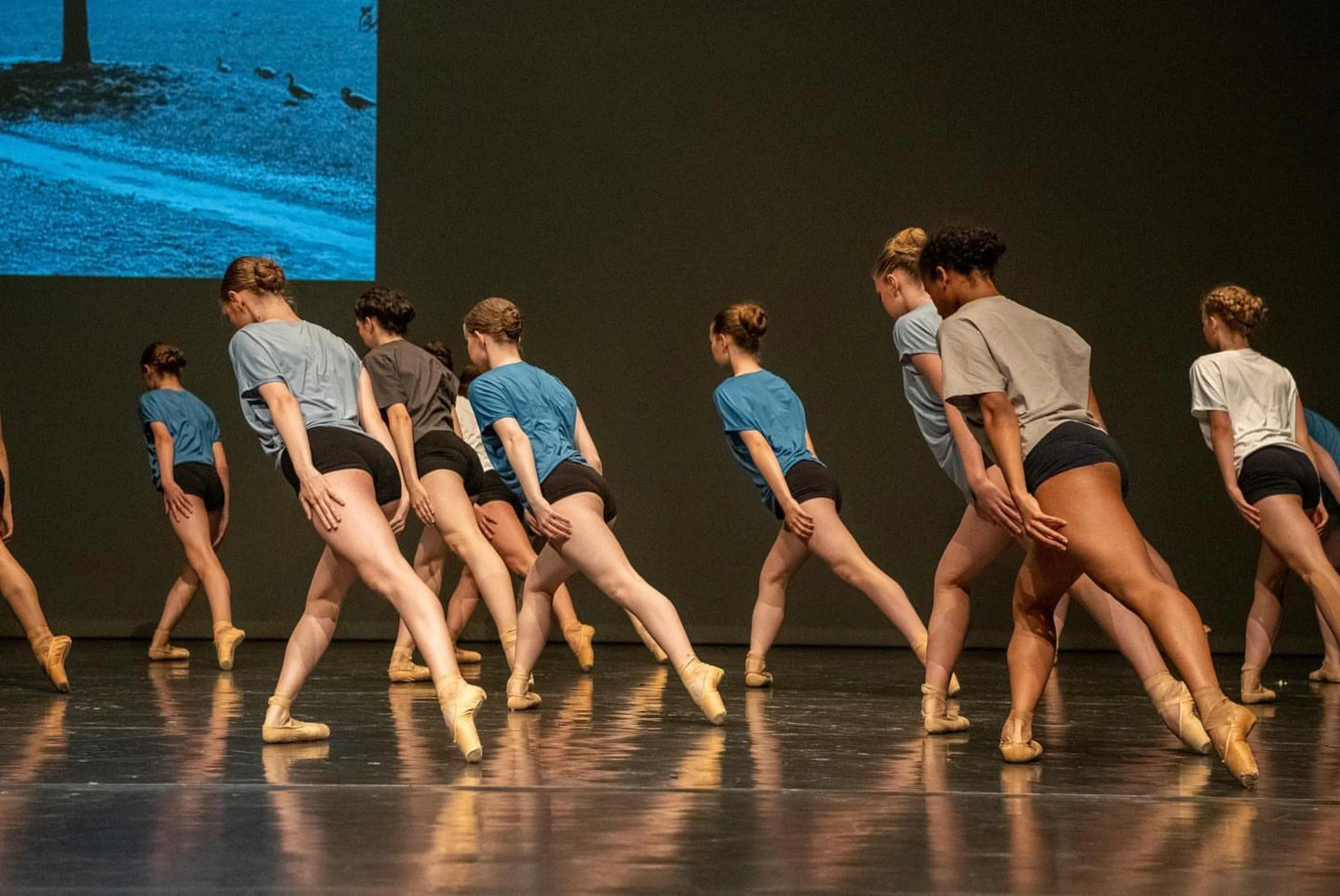
Students of the Gymnasium Essen-Werden © Mario Perricone
Watching the young dancers at the Prix de Lausanne, one cannot help but be amazed by the quality of their dance, the technique and flair these young dancers are showcasing, thus proving that ballet is still very hot amongst the new generation. Yet, on a general observation, the under-representation of dancers from Europe poses a very broad question - how do we stand in Europe towards classical technique and ballet in general?
The shift that I observed over the last decades stems from a rise of snobbism towards classical technique - not from teachers and pedagogues within dance education, many of whom fight to maintain rigorous classical training against institutional pressure, but from those outside the ballet world who nonetheless control its fate. Politicians and general directors, often with limited dance expertise, have relegated ballet as an art form from the past and positioned modern dance as the primary focus of dance education. Where I believe modern technique is relevant, I deeply regret that its implementation was positioned in opposition to classical rather than as complementary. This narrow-minded separation, a value hierarchy of modern versus classical, new versus old, has hindered considerably the range and quality students could benefit from when receiving high-level education in both techniques.
I find this tendency rather specific to dance as it has no comparison to other performing arts such as opera, music, and theatre, where classicism still is the cornerstone of their formation. This educational imbalance is, in my view, totally misrepresented and overlooked by the cultural politics. There are some exceptions of course - Paris Opera Ballet School, Académie Princesse Grace de Monaco to name a few - and the private sector produces here and there very good classically trained dancers, but the overall ballet education landscape lacks serious investments.
And when these emerging talented dancers reach their educational completion, what choice do they have? What translates their sacrifice and hard work into? The reality is that many ballet companies with a strong classical repertoire have either closed or shifted their artistic focus in recent decades, shrinking the field of opportunities for classically trained students. The reasons are diverse and cannot be summarised in a few sentences, from political influences to artistic shifts, or budget limitations, many different realities changed the dance landscape all around.
As a choreographer, I am all for having a dance world that is moving forward. But I just think a modernisation should not be at the expense of the classical technique - that classical technique is part of what one expects in a modern and versatile dancer. I thrived in companies (Paris, Leipzig, and Düsseldorf) that had a mixed repertoire. I felt that the richness of different styles completed one another. When I see companies that are congested around one technique, albeit working with different choreographers but in similar factures, I cannot help but regret that one aspect of a dancer’s education (in this case, classical) is depleted. This goes naturally both ways. A too classical-oriented company misses out on a sane and liberating iconoclastic practice.
I believe firmly that many - even among dance professionals - confuse technique with artistic form and expression; a classical technique can be highly modern and a modern technique somewhat dated. I pose this here, but I will develop this opinion in another essay.
A few years ago, I created for the students of the Gymnasium Essen-Werden. This high school - one of its kind in Germany - has a strong classical and a strong modern division. Although they are working with amateurs, trying to up-bring them into the discipline and body expression which they can benefit from later in life. Their approach can be compared to one of a high-profile dance school.
My collaboration with them— in my style, hybridisation of classical and modern— drew both dance divisions a little closer— the classical teachers finding common ground with the modern teachers and vice versa. The material that I created for the students was rehearsed equally by the ballet and contemporary teachers. The convergence of both insights into the students' upbringing gave them a broader sense of what dance is— and can be— a constant dialogue from different styles and techniques, one not excluding the other but complementing one another. This bidirectional approach remains exceptional.
Across European dance education, there exists a troubling asymmetry in how versatility is conceived and demanded. Classically trained dancers are continually pushed to develop contemporary skills, to be versatile and modern in their capacities. This expectation is constant, institutionalised, presented as professional necessity. The inverse rarely occurs. Contemporary dancers face little equivalent pressure to develop— or maintain— classical technique. The underlying assumption seems to be that classical training is an optional enhancement rather than a foundational necessity, that one can be a complete dancer while lacking what every other performing art still considers essential education. This one-way expectation reveals a hierarchy beneath claims of artistic evolution. If classical and contemporary truly completed one another, versatility would be demanded in both directions.
The will and passion of these young dancers, those of the Prix de Lausanne, and elsewhere in the world, coming from different countries, different cultural and social backgrounds, need a place in this ballet world— a world that is unfortunately slowly shrinking, and that is urgent to reinvigorate by the dance schools, companies, the cities, and politicians who have the cards in their hands. The Prix de Lausanne is a vibrant vitrine on how the world stands towards ballet.
The next generations are coming full speed ahead with their raw energy and sheer motivation. It is up to those involved in the world of dance to take action. The question is whether Europe will rise to meet that enthusiasm or continue abandoning what it created.